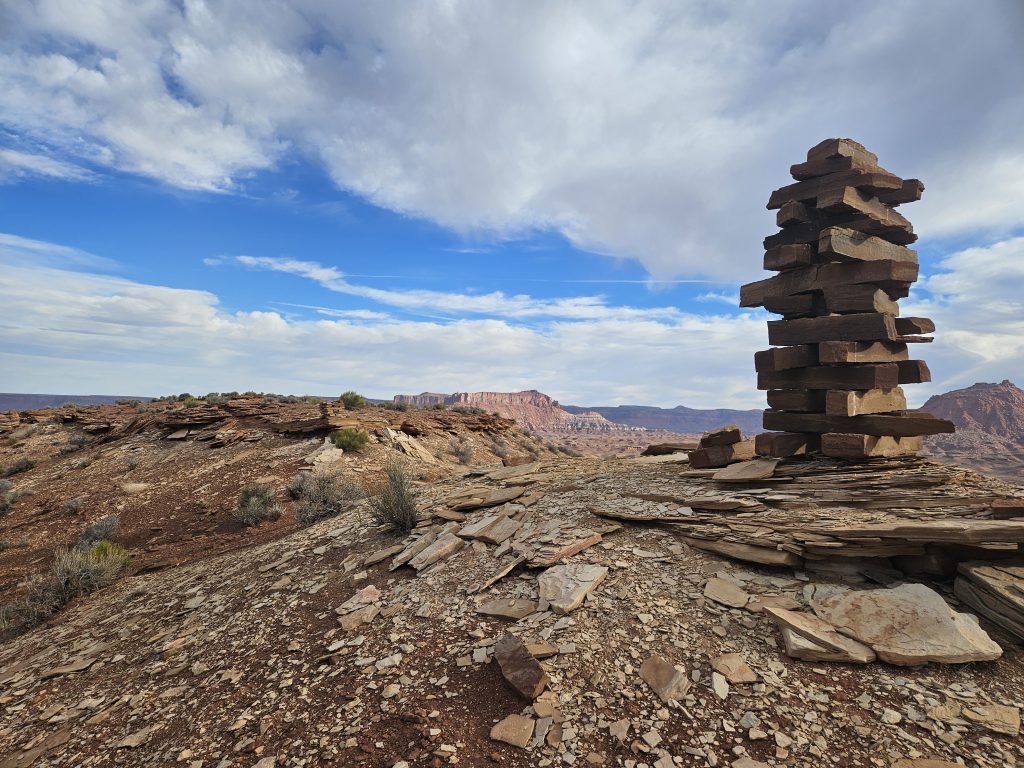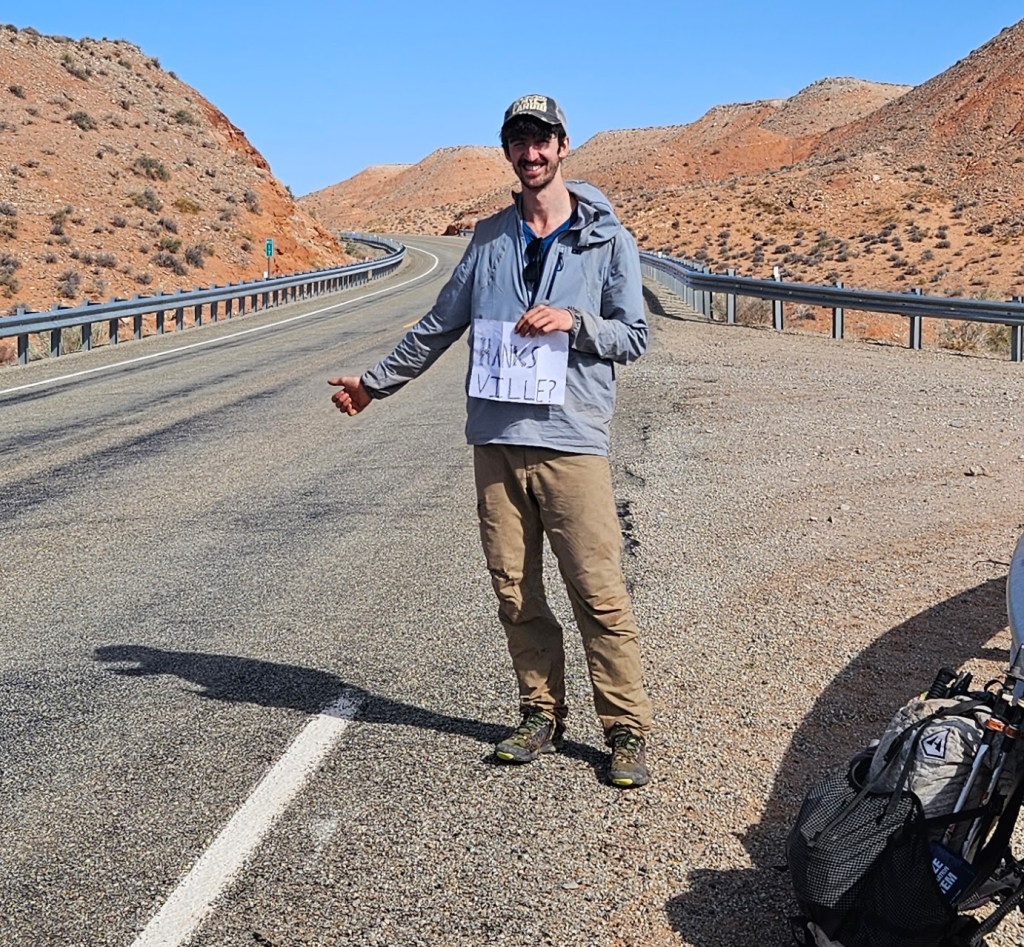
What a beautiful, hard hike this has been!
2 days before reaching the Zion border and the end of my Hayduke hike, I was on a 30-mile road walk, across far-reaching expanses of sage, to the town of Colorado City — once home to a fundamentalist latter-day saints cult. Since the arrests, state seizures of land, and other odds-and-ends, the current denizens have mostly abandoned that non-monogamous sect for the more-accepted allure of sanitized capitalism. Meanwhile, plenty of friends in California opine that polyamory might be the only realistic way to own a home. The stark contrast between wealth on one side of a town and rural poverty on the other means that urbanites are not the only ones left feeling abandoned by the government, no longer being served the American Dream. Despair is a common ground uniting liberals and conservatives in these interesting times.
There’s a lot of land out here. You can see it for miles all around; across stunning vistas and down unexplored side canyons, whose fractal patterns make the land seem truly infinite. The tension between land availability and “scarcity,” driven by the public lands system, is apparent. The federal government controls almost 65% of Utah’s land (rivaled only by Nevada). When you approach towns, you find “endorsed by Trump” iconography on the political lawn signs. Locals express concern over park boundary changes that make mining, or ranching, or some other-named enterprise once endemic to the West “uneconomic”.
The same abundance of land means that urban planning has gone wild in its dedication to the automobile rather than to its people. Main streets are spread so far that locals in towns of only 2,000 must seek assistance from their trucks to find community. A weary hiker has no option but to add town miles between chores. These are the same miles that make it difficult to cultivate the bustling tourist hubs people seek when on vacation (easily overlooking walkability the other 50 weeks of the year). Without tourism, how can the local communities here thrive? There are few job prospects and high costs. Is there still a dream to be found, or has this too eroded like sandstone of the Colorado Plateau?
This is the land of Edward Abbey and his iconic character “George Hayduke” — an often lauded, if not lovable, anti-hero with a steadfast desire to blow things up to protect the environment. More actionable is Hayduke’s ability to fling beer cans out the side of his fast-moving Jeep as he races from one corner of Utah to the next. The ranchers may at least share this one thing in common with Hayduke. There is no shortage of beer cans or spent Arizona Iced Tea on the roadsides; shiny objects, nestled between sage and prickly pear, reflecting the unrelenting desert sun.
The government created this West by promoting as much land occupation as possible. Securing it for “the benefit of the country.” This is century-old policy that has collapsed in the modern era. The key western cities of Phoneix, Denver, Salt Lake, Las Vegas, and Los Angeles have taken hold, leaving rural outposts to flounder in a landscape once supported by generous political subsidies. These subsides are evaporating like ephemeral streams in undammed canyons. What remains is little more than “unmaintained trail,” likely reclaimed by desert in some years.
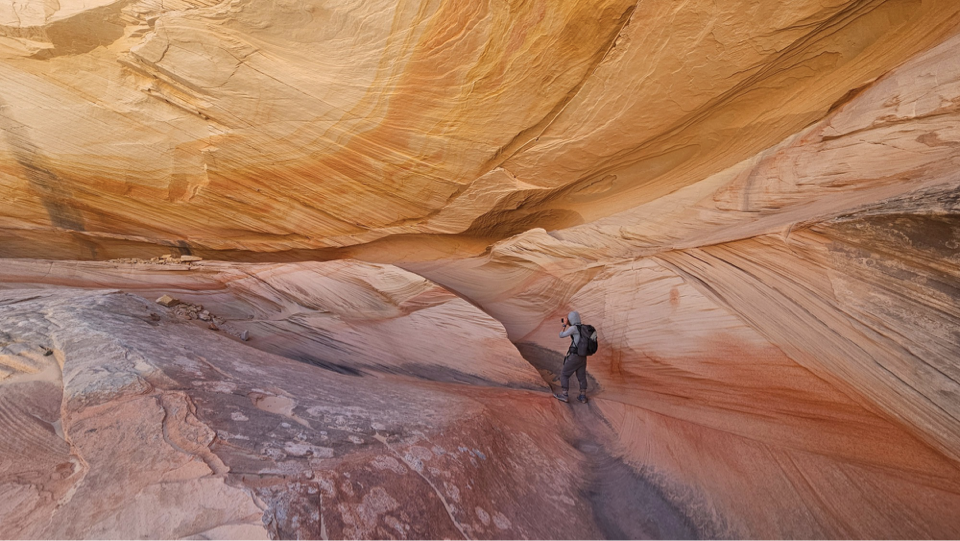
Sandstone monoliths march proudly across this land into one canyon and out the next. The land is sneaky, cramming unbelievable beauty between the contour lines of topographic maps. The only way to reveal the secrets of this place is to hike. Only then may you begin to understand how much can hide in a width less than 40 feet — a radically different sort of 2-lane road cutting through the States.
I’ve been able to spend a short time in this part of the country, yet more time on this landscape than most will ever spend. At this time, the Hayduke Trail is likely the most beautiful long-distance hiking trail in the world. Artists paint the canyons, and benches, and skies using supernatural colors. This is the only honest way to convey the alien sense of wonder and otherworldliness the land imposes on its visitors. Of the 900 miles I’ve spent winding a torturous course through all of Utah’s National Parks and many of its National Monuments, it’s the 200 miles I’ve spent in Arizona’s Grand Canyon that feels the most imposing. A canyon so wide you cannot see the top of its sides. A canyon so mysterious that many people have spent their entire lives exploring uncharted routes, never cumulatively exhausting its possibilities. A canyon so deep you can experience a 70-degree temperature difference from its floor to its rim. Trails, like the Horse Thief trail, once allowed Utah’s “entrepreneurs” to hide out and run stolen goods from the North Rim of the Canyon to the South. Since the erection of Glen Canyon Dam, it is no longer possible to ford the Colorado River. Would-be horse thieves have been thwarted by this once-believed untamable river.
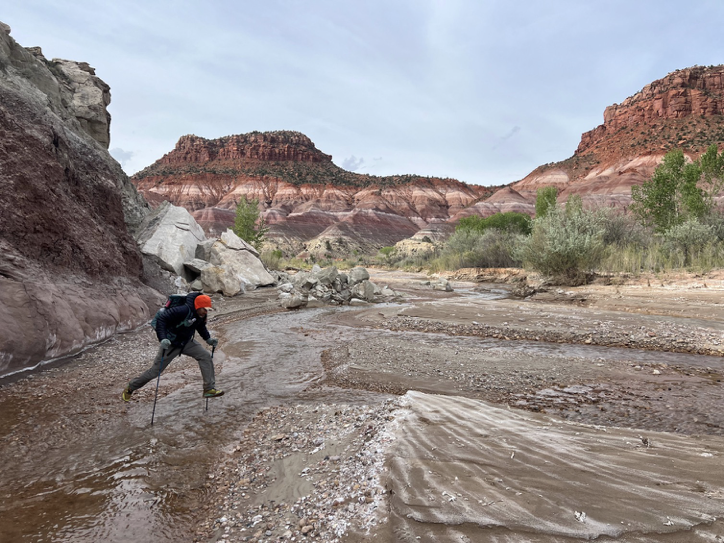
As the last truly long-distance hike I’m likely to do for some time, I cherish my time out here. I’ve become friends with the flora. I’ve learned that thirst-quenching puddles might be found near lines of cottonwoods or the shaded sections of dry falls. If you get the chance, I encourage you too to seek this landscape. To explore some fraction of the desert’s nooks and crannies. To find joy in the fluffy tufts of the ears of the Kaibab squirrel or to find relief from the sun in a narrow slot canyon.
As we enter the semiquincentennial year of experimentation in the governance of this land and its people, I hope we can maintain the splendor of and access to these places. May we come to better understand the intentionality of our governance, and its ramifications. Perhaps we can steward the land and its inhabitants (both homonid and other) in ways befitting the confusing geologic time it’s taken to create something so monumental.
As they say, “Hayduke Lives!”
Greetings from Zion,
Jeff